Residential Schools: A History
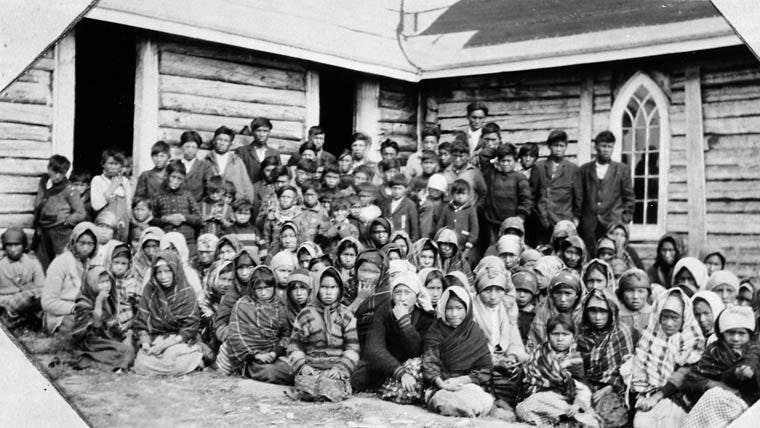
Residential schools were not just schools—they forced Indigenous children away from their families, suppressed their culture, and caused widespread suffering. Children were made to follow strict religious rules and regularly suffered abuse, neglect and were forced to work hard labour jobs.
Living conditions in the schools were harsh. The buildings were overcrowded and poorly maintained, and there wasn’t enough funding to properly care for the children. Many Indigenous children suffered physical, emotional, and sexual abuse. They were not allowed to speak their own languages or practice their traditions, and were punished severely if they did.
Tragically, thousands of children never made it home. It’s estimated that more than 6,000 died due to disease, neglect, and abuse. The impact of these schools is still felt today by survivors, their families, and entire communities.

Over 150,000 Indigenous children were taken from their families and sent to residential schools in Canada, where many never returned home. Despite early reports of these harms, the system continued for decades, and its effects are still felt across generations today.
"I want to get rid of the Indian problem....our objective is to continue until there is not a single Indian in Canada that has not been absorbed into the body politic and there is no Indian question, and no Indian department, that is the whole object of this bill."
- DR. Duncan Campbell Scott (1920) Department of Indian Affairs 1913-1932.
Create Your Own Website With Webador